Bracelets
Diamond tennis bracelets, Cuban link bracelets and bangles in platinum and 18ct gold. Every piece available for hallmarking and resizing.
A bracelet is the piece of jewellery most likely to be damaged and most likely to be lost, because it is on the part of the body that hits things. That single fact should drive the buying decision more than it usually does: on a tennis bracelet the clasp and the safety catch matter more than the carat weight, and on a chain bracelet whether the links are solid or hollow matters more than the gram price.
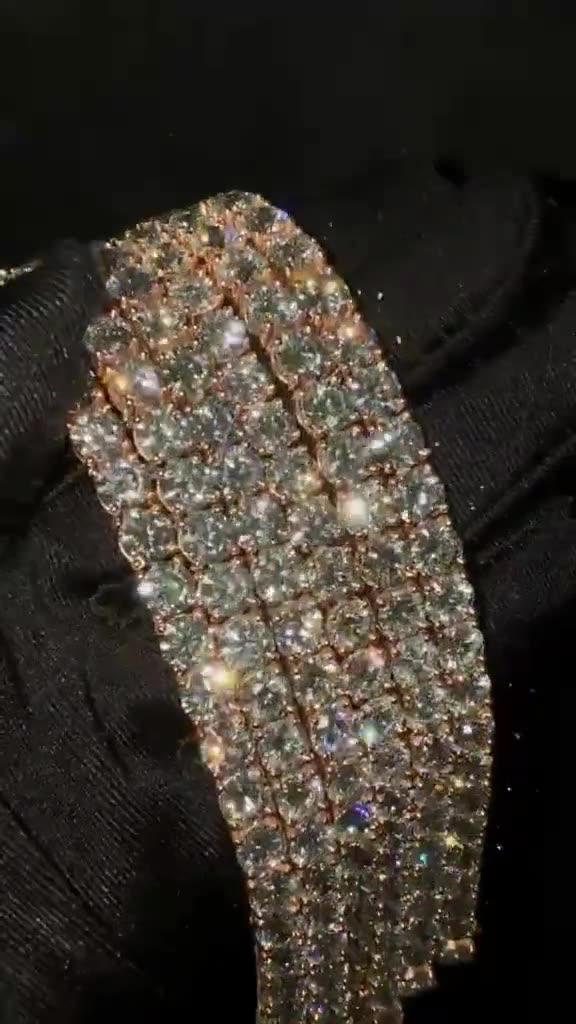
Five-Row Diamond Cuff Bracelet
18ct rose gold, five rows of round brilliants
Enquire Now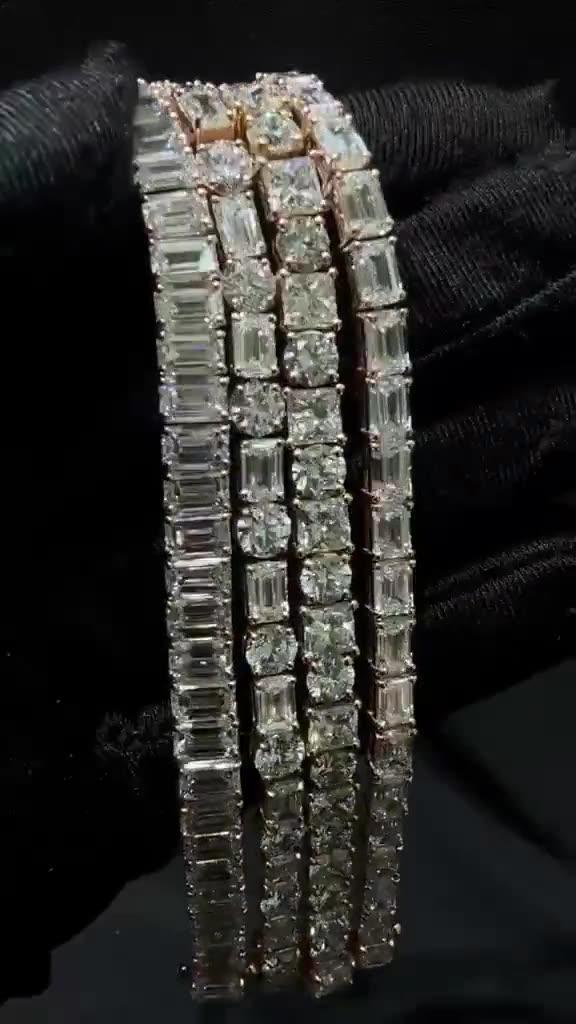
Baguette & Round Diamond Tennis Bracelet Set
three bracelets — baguette and round rows in rose and white gold
Enquire Now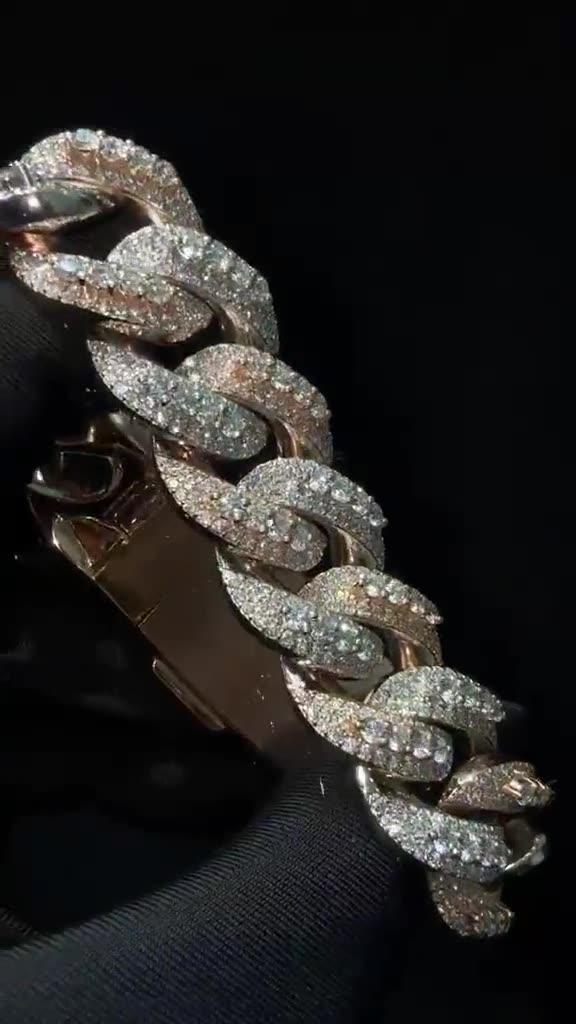
Two-Tone Pavé Cuban Link Bracelet
18ct rose and white gold, pavé-set links with a box clasp
Enquire Now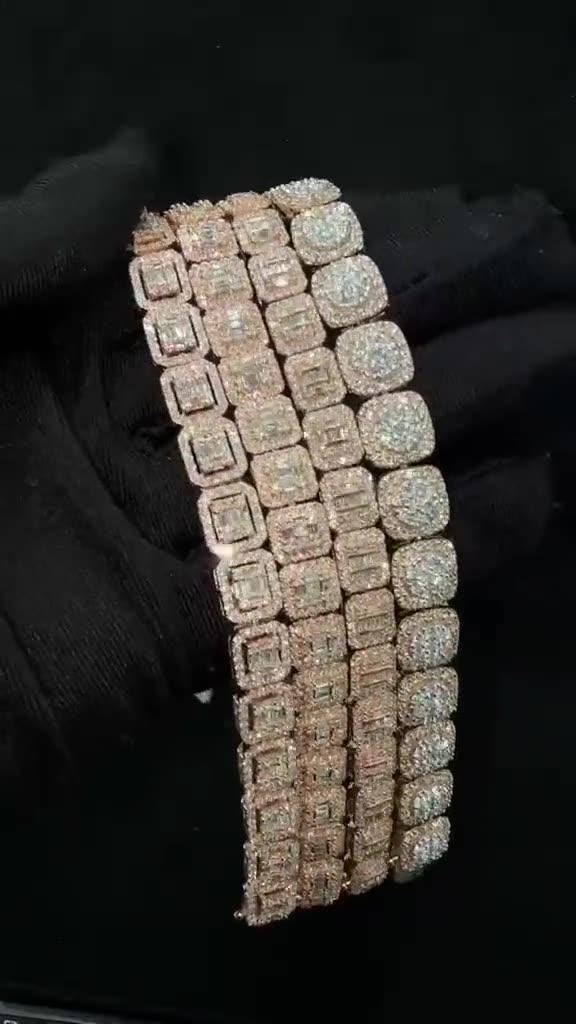
Rose Gold Baguette Cluster Bracelet
18ct rose gold, alternating baguette and cluster panels
Enquire Now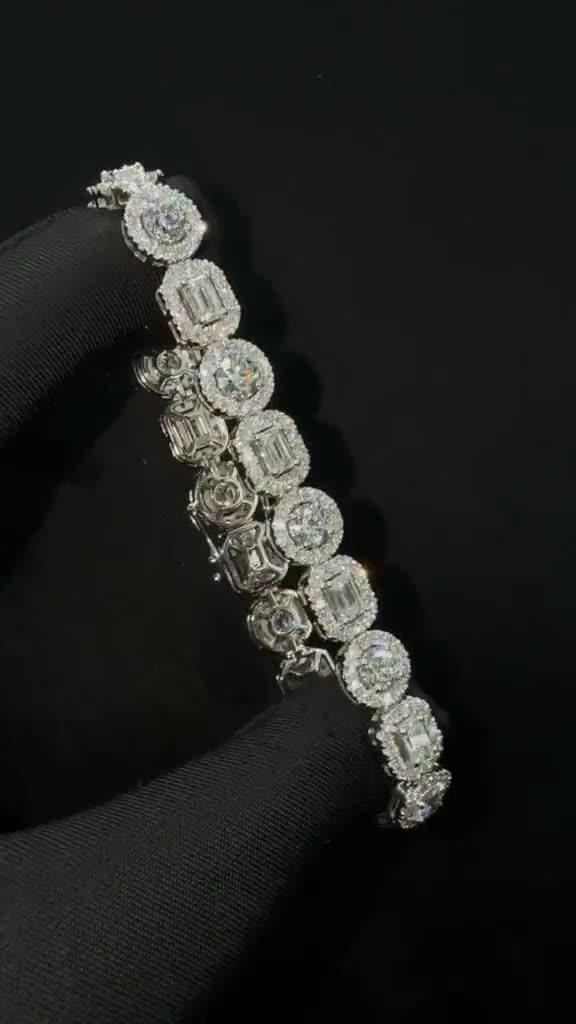
Halo Cluster Diamond Tennis Bracelet
18ct white gold, alternating round and baguette halo clusters
Enquire Now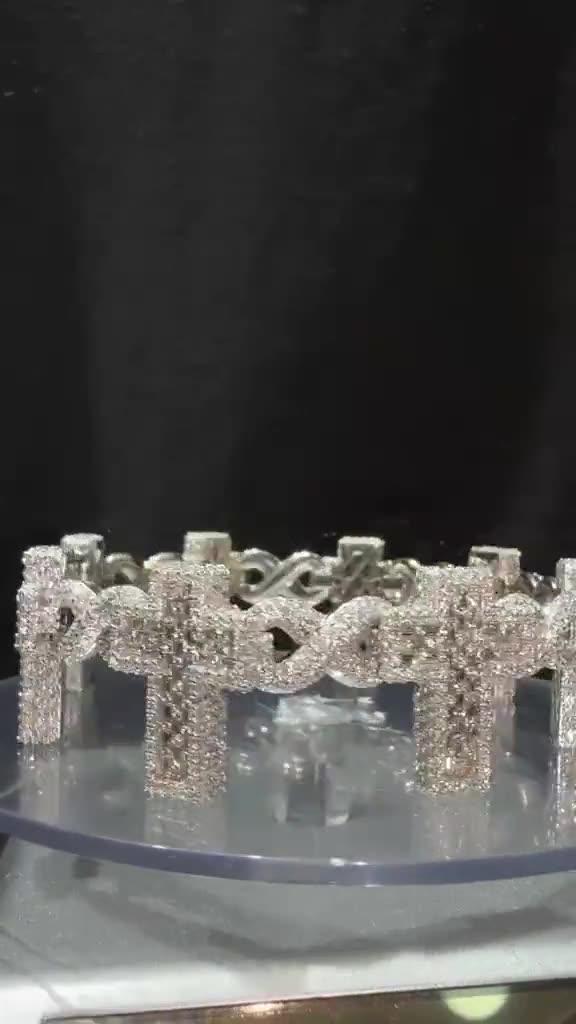
Diamond Cross Charm Infinity Bracelet
18ct white gold infinity links hung with pavé cross charms
Enquire Now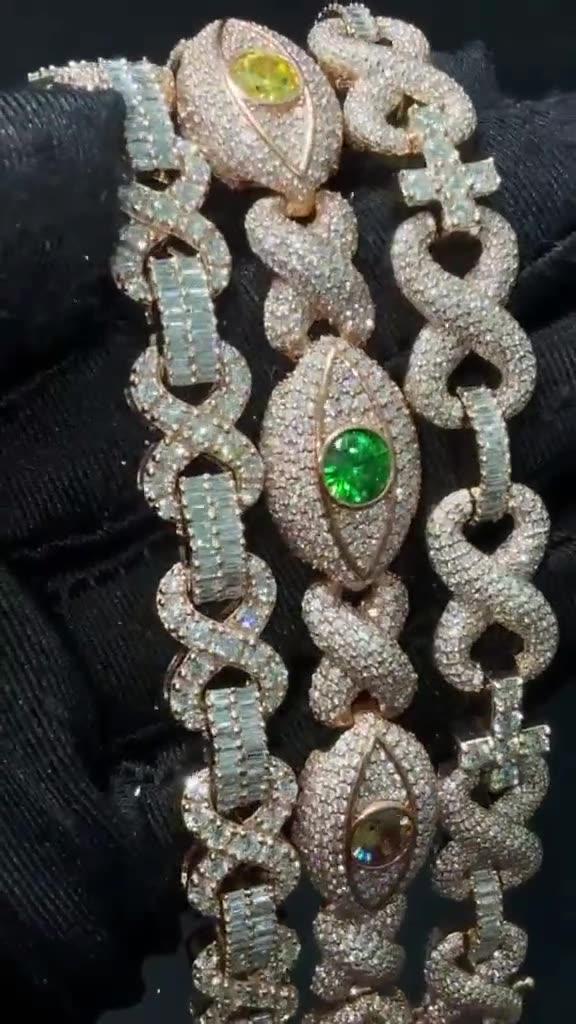
Gemstone Infinity Link Bracelet
18ct rose gold infinity links with marquise emerald, citrine or sapphire centres
Enquire Now
Choosing bracelets
Tennis bracelets: the clasp is the product
A line of diamonds is only as good as the thing holding it on a wrist. Look for a box clasp with a figure-of-eight safety catch, or a double catch on anything substantial — a single push clasp on a bracelet worth thousands is an accident waiting to happen. The name, incidentally, comes from Chris Evert losing hers mid-match at the 1987 US Open and stopping play to find it, which tells you everything about why the catch matters.
Solid or hollow, on a chain bracelet
Cuban and curb links are made either solid or hollow, they look near enough identical when new, and they are entirely different purchases. Hollow links are lighter and cheaper and dent, crush and split with wear; solid links can be repaired almost indefinitely. Gram weight is the honest signal here — ask for it, because two bracelets of the same length and width can differ severalfold in gold content and price.
Sizing, which is not one-size
Measure the wrist snugly and add roughly a centimetre and a half for a comfortable bracelet, or a little less for one meant to sit close. A tennis bracelet that is too long rotates so the stones face downward and wears through faster on the underside; too short and it will not sit flat. Links can be added or removed at the bench, and it is worth doing rather than living with it.
The hallmark
Any gold bracelet over one gram sold in the UK must be hallmarked, and a bracelet is easily heavy enough to qualify. It is the independent check that the metal is what it is described as, tested by an assay office rather than asserted by a seller.
FAQS
Measure the wrist with a tape snugly, then add about 1.5cm for a comfortable fit that moves a little, or about 1cm for one that sits close. Seven inches is the most common women's size and eight the most common men's, but wrists vary enough that measuring is worth the minute it takes. Length can be adjusted at the bench by adding or removing links.
Hollow links are formed from a thin shell of gold around a void. They look the same as solid links when new, cost considerably less and weigh a fraction as much — and they dent, crush and split with normal wear, after which they are difficult and often uneconomic to repair. Solid links can be repaired, resized and re-polished more or less indefinitely. Always ask for the gram weight rather than just the width and length.
Insist on a proper box clasp with a figure-of-eight safety catch, and on anything substantial a double safety catch. Check the catch closes with a definite click rather than a soft push, and have it inspected once a year — clasps wear before anything else on a bracelet does. We will fit a stronger catch to an existing bracelet if the one on it is not up to the job.