Necklaces & Pendants
Bespoke ice pendants, initial pendants, Cuban chains and diamond rivière necklaces. Made-to-order in the Alpoe London workshop.
Most problems with a necklace are problems of proportion rather than quality. A chain too light for its pendant will wear through at the bail and eventually part; a chain too heavy overwhelms the piece it is carrying; and length changes where a pendant sits on the body more than any other decision. Get those three right and the rest is a matter of taste.
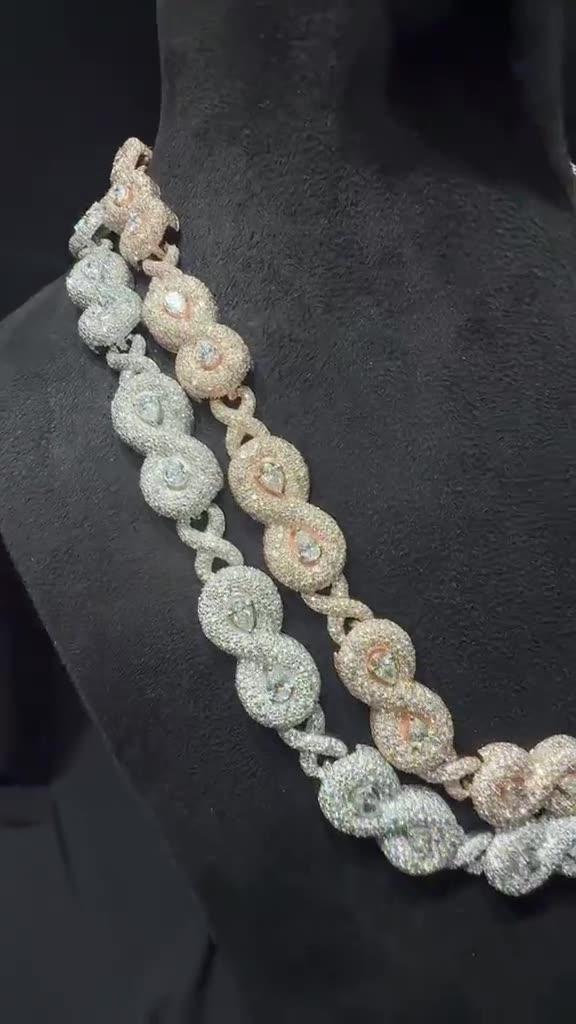
Two-Tone Infinity Link Chain
18ct rose and white gold, fully pavé-set infinity links
Enquire Now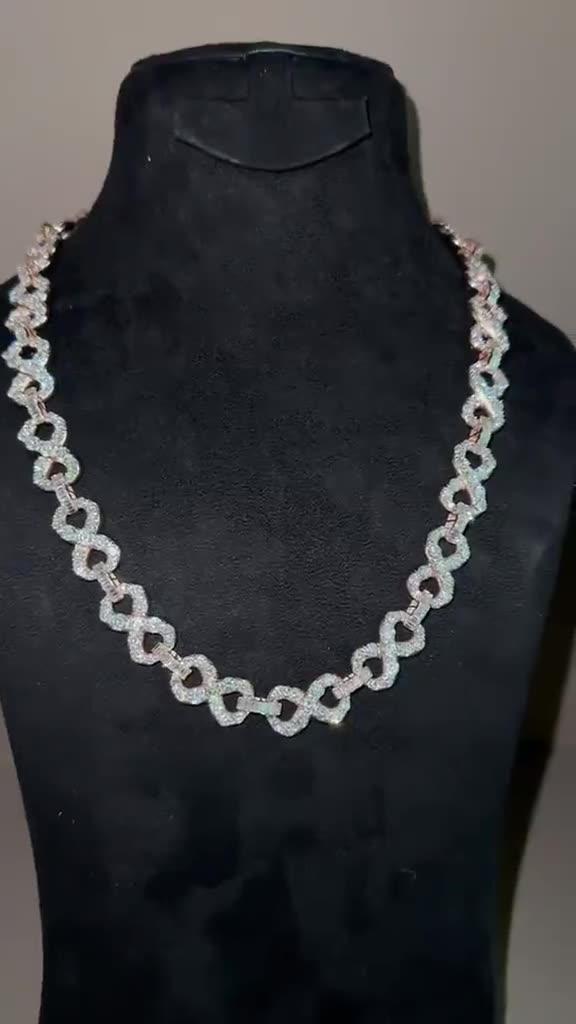
Diamond Infinity Link Chain
18ct white gold, pavé infinity links at a 20-inch drop
Enquire Now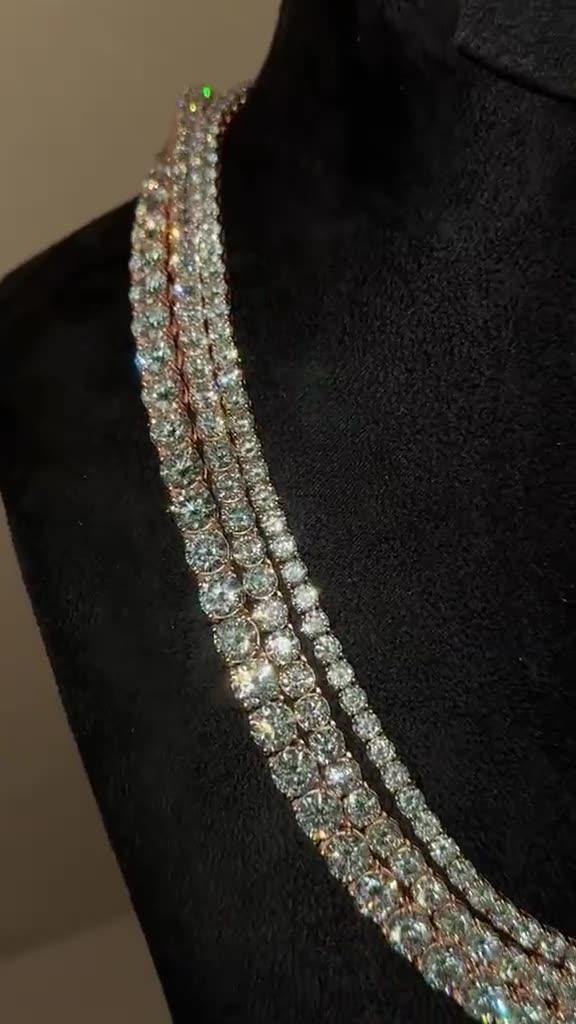
Double Row Diamond Tennis Necklace
two graduated rows of round brilliants in 18ct white gold
Enquire Now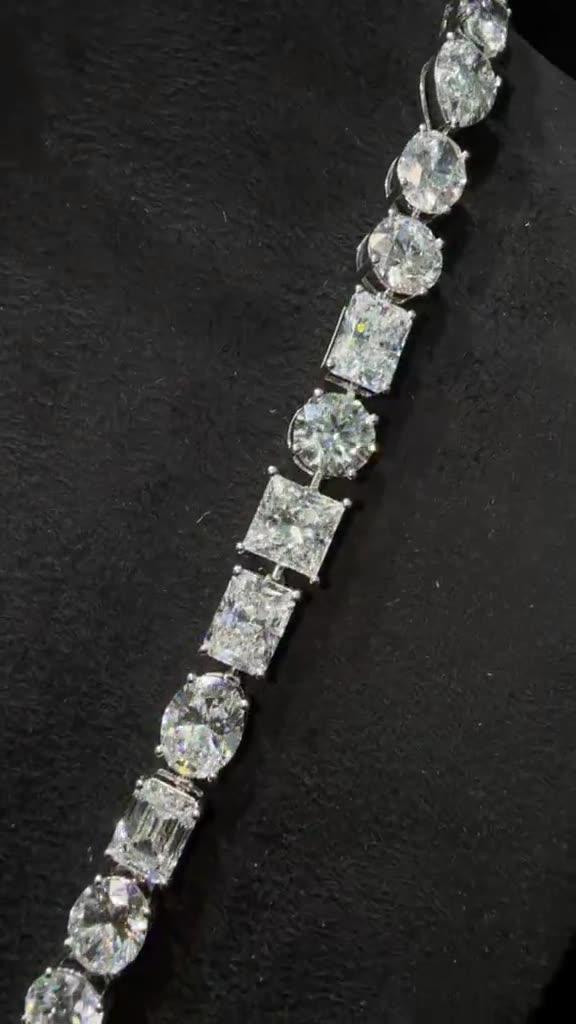
Mixed Cut Diamond Rivière Necklace
round, emerald, radiant and pear cuts alternating in 18ct white gold
Enquire Now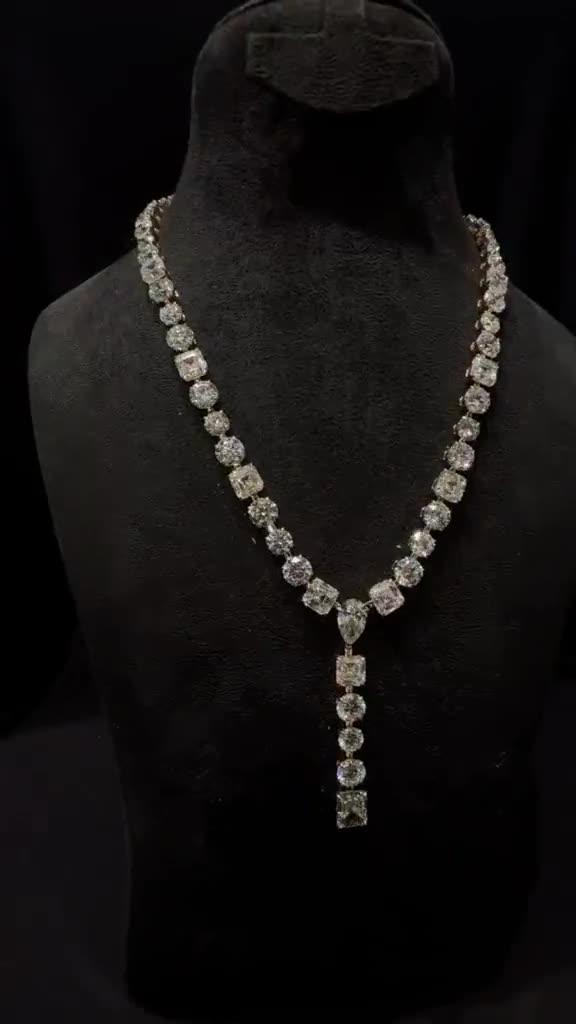
Diamond Rivière Y-Drop Necklace
graduated cushion cuts with a detachable drop tail
Enquire Now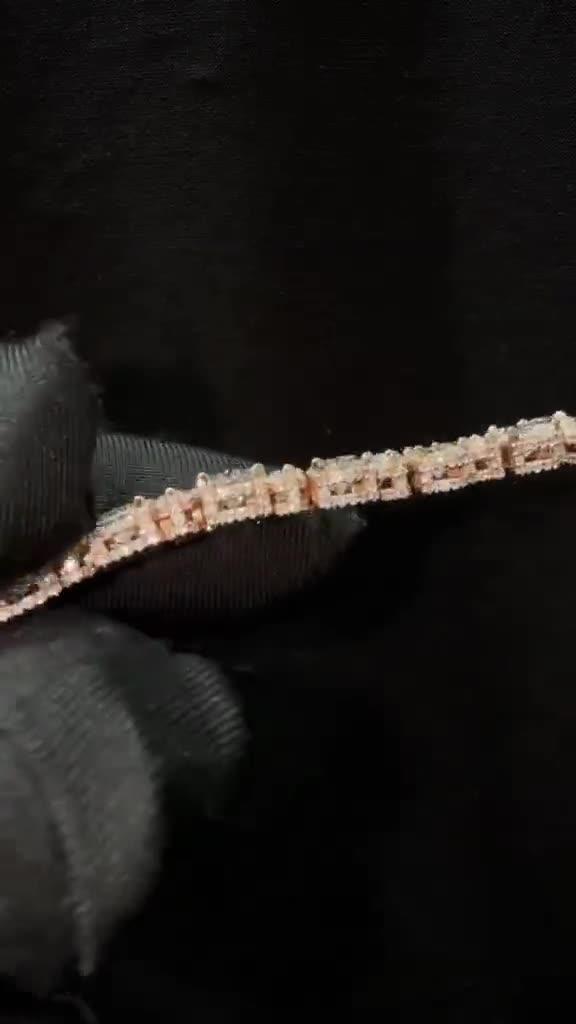
Rose Gold Pear & Round Diamond Tennis Chain
18ct rose gold, alternating pear and round brilliants
Enquire Now
Choosing necklaces & pendants
Length, and where it actually sits
On most adults, 16 inches sits at the base of the neck, 18 inches on the collarbone, 20 inches just below it, and 22 to 24 inches at or near the sternum. Eighteen is the default for a reason — it works over almost any neckline. If a pendant is going to be worn with open collars, 20 or 22 gives it room to be seen. Men's chains are usually 20 to 24.
Match the chain to the pendant, not to the budget
The bail — the loop the chain passes through — sets the maximum chain width, and a chain that only just fits will chafe. Equally, a heavy pendant on a fine chain concentrates all its weight on two points and is the most common way a necklace fails. Bring the pendant when choosing a chain, or buy them together and have the pairing checked.
Solid or hollow, again
As with bracelets, and it matters more here because a neck chain flexes constantly. Hollow rope and Cuban chains kink and split; solid ones can be soldered and repaired. The gram weight tells you which you are being offered far more reliably than the description does.
Rivière or tennis
A rivière is a line of graduated stones, largest at the centre, tapering toward the clasp — it is designed to be seen against skin and sits as the focal point of an outfit. A tennis necklace runs the same size stone the whole way round. Both are lines of diamonds; the rivière is the dressier and more traditional of the two, and the tennis the more modern and more wearable day to day.
FAQS
Eighteen inches is the safest default for a woman and sits on the collarbone. Sixteen sits at the base of the neck, 20 just below the collarbone, and 22 to 24 at or near the sternum, which suits a larger pendant or an open neckline. Men's chains are typically 20 to 24 inches. If it is a gift and you cannot measure, 18 inches with an extender chain is the forgiving choice.
One rated for the weight, with a link gauge that fills the bail rather than rattling through it. A heavy pendant on a fine chain puts all its load on the two links either side of the bail, which is exactly where necklaces break. Bring the pendant in and we will pair it properly — it takes a few minutes and it is the difference between a piece that lasts and one that is lost.
A rivière uses graduated stones, largest at the front and tapering toward the clasp, so it reads as a single sweeping line and sits as the centrepiece of an outfit. A tennis necklace uses the same stone size the whole way round and is more uniform and more casual. Both are continuous lines of diamonds; the rivière is the more formal of the two.